"Justice is the constant and unfailing will to give to each his right.'
-- Azo of Bologna
-- Azo of Bologna
|
"Justice is the constant and unfailing will to give to each his right.'
-- Azo of Bologna "But while property is considered as the basis of the freedom of the American yeomanry, there are other auxiliary supports; among which is the information of the people. In no country, is education so general -- in no country, have the body of the people such a knowledge of the rights of men and the principles of government. This knowledge, joined with a keen sense of liberty and a watchful jealousy, will guard our constitutions and awaken the people to an instantaneous resistance of encroachments."
--Noah Webster, On Education of Youth in America, 1790 MinutemanRKBA.com
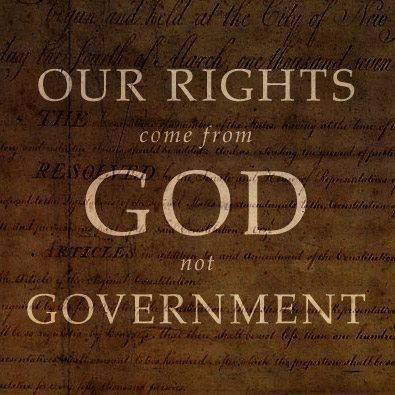
Tom Hoefling For four hundred years in this country, my family has had a well-earned reputation for being well-armed, and of not being afraid to use those arms if life, liberty, property, or their communities were threatened. I'm a descendent of Alice Proctor, the wife of Virginia ancient planter John Proctor. In the Indian attacks and massacres of 1622 in which as many as a third of the Virginians were killed, John was in England, and she and her household held off the savages for a month. The British officers threatened to burn down the Proctor Plantation if she didn't remove herself from the frontier back to Pace's Paines, which she then had to do, but the Indians knew better than to ever come anywhere close to her or her family again. A few generations later, at the start of the Revolution, five Proctor brothers, including my forebear Little Page Proctor, were part of the Virginia militia that secured the NW wilderness against the British-allied tribes. They were among the forty men with Daniel Boone who held off more than 400 Indians for ten days at Boonesborough, in what became Kentucky. They knew that when it came down to it they had to depend on themselves and their neighbors, not on some far-off government. Anyone who thinks it is fundamentally any different now is fooling themselves. We will NOT disarm. Our natural rights, the right of self-defense being foremost, were given to us by God Himself, and Barack Obama and Dianne Feinstein are NOT welcome to them. “Among the natural rights of the Colonists are these: First, a right to life; Secondly, to liberty; Thirdly, to property; together with the right to support and defend them in the best manner they can." - Samuel Adams "We hold these truths to be self-evident, that all men are created equal, that they are endowed by their Creator with certain unalienable rights, that among these are life, liberty and the pursuit of happiness. That to secure these rights, governments are instituted among men..." - The Declaration of Independence “Compromise is but the sacrifice of one right or good in the hope of retaining another--too often ending in the loss of both.”
-- Tryon Edwards CBS New York
Police Wonder If They’ll Need To Confiscate Assault Weapons In Event Of Ban NEW YORK — Amid talk of reinstating the assault weapons ban that expired eight years ago, police departments nationwide are thinking of ways to confiscate such weapons. As WCBS 880’s Marla Diamond reported, among the departments considering taking action is the NYPD. Police Commissioner Ray Kelly said if Congress were to reinstate the ban, police are wondering whether it will be their responsibility to confiscate them. Read this story at newyork.cbslocal.com ... "The End and Design of civil Society and Government, from this View of it’s Origin, must be to secure the Rights and Properties of it’s Members, and promote their Welfare; or in the Apostle’s words, that Men may lead quiet and peaceable Lives in Godliness and Honesty, (I Tim. 2.1.) i.e. that they may be secure in the Enjoyment of all their Rights and Properties righteously acquired, and their honest Industry quietly proffess it’s proper Rewards, and they enjoy all the Conveniencies of a social Life, to which Uprightness entitles them; and that Men may peaceably practice Godliness,—may worship & serve the Supreme Being, in the Way they believe most acceptable to him, provided they behave peaceably, and transgress not the Rules of Righteousness in their Behaviour towards others.
In all Governments, Magistrates are God’s Ministers, designed for Good to the People. The End of their Institution, is to be Instruments of Divine Providence, to secure and promote the Happiness of Society; to be Terrors to the doers of Evil,—to prevent and punish Unrighteousness, and remedy the Evils occasioned thereby; and to be a Praise, a Security and Reward to them that do well, (Rom. 13. ch.) The End and Design of Government, is to secure Men from all Injustice, Violence and Rapine, that they may enjoy their Rights and Properties; all the Advantages of Society, and peaceably practice Godliness:—that the Unjust and Rapacious may be restrained, the ill Effects of their Wickedness be prevented, the secular Welfare of all be secured and promoted." -- Abraham Williams, An Election Sermon, Boston, 1862 The Equal Protection for Posterity Resolution
America's Party Platform (Includes the Resolution) America's Party Leadership Pledge (Includes the Resolution) Tom Hoefling: I Believe (Includes the Resolution) Tom Hoefling for President 2012: Mitt Romney Rejects the Reagan Republican Pro-Life Platform5/20/2012 One of the primary planks of the Republican Platform is the party's commitment to recognizing the Fourteenth Amendment protection of unborn children. In this video clip, Mitt Romney states his opposition to that commitment. Mitt Romney is not a prolife candidate. Vote for life in 2012. Vote for Tom Hoefling. tomhoefling.com "Government, in my humble opinion, should be formed to secure and to enlarge the exercise of the natural rights of its members; and every government, which has not this in view, as its principal object, is not a government of the legitimate kind."
--James Wilson, Lectures on Law, 1791 |
SelfGovernment.US
"Every man, and every body of men on earth, possesses the right of self-government."
|

 RSS Feed